

No-Charge Decision in a Crypto Copy Trading Investment Consulting Fraud Case
Case Overview
- Client Information
- Individual / Suspect
- Case Details
-
Our client worked as a sales representative at a virtual asset investment consulting company. His role was to guide customers through the process of registering with an overseas cryptocurrency exchange and to explain how futures trading and copy trading worked.
The fee structure was performance-based. The company would receive a portion of the customer’s profits only if profits were generated.
After the customer suffered investment losses, the customer filed a criminal complaint alleging fraud. The complainant claimed that the recommended exchange was a fabricated program designed to display false profits, and that the company had solicited the investment from the beginning with the intent to misappropriate the funds.
As a result, our client was summoned by the investigative authorities as a suspect in a fraud case.
Decent's Strategy
1. Establishing the Existence of the Exchange
We verified through publicly available materials that the recommended exchange was an actual overseas cryptocurrency exchange listed on CoinMarketCap.
This was an important starting point in refuting the complainant’s allegation that the platform was a “fake profit manipulation program.”
2. Confirming the Actual Destination of the Investment Funds
We demonstrated through transaction records that the funds deposited by the customer were converted into Tether (USDT), transferred to an exchange account under the customer’s own name, and used by the customer directly for futures trading.
In other words, the investment funds were not diverted to the suspects. The structure showed that the assets remained in the customer’s own exchange account and were traded by the customer.
3. Proving Risk Disclosure and Voluntary Investment Decision
Before the contract was finalized, the company conducted a confirmation call explaining the possibility of principal loss. We submitted evidence showing that the customer had acknowledged and agreed in writing that he understood the risks involved.
There was also no evidence that the company or the suspects had guaranteed profits or promised the return of principal.
4. Demonstrating the Absence of Discretionary Trading or Pressure to Make Additional Deposits
Through KakaoTalk messages and other communication records, we showed that the suspects did not take control of the customer’s account, conduct discretionary trading on the customer’s behalf, or pressure the customer to make additional deposits.
The losses were attributable to the inherent market risks of cryptocurrency futures trading, not to fraudulent conduct by the suspects.
Results & Significance
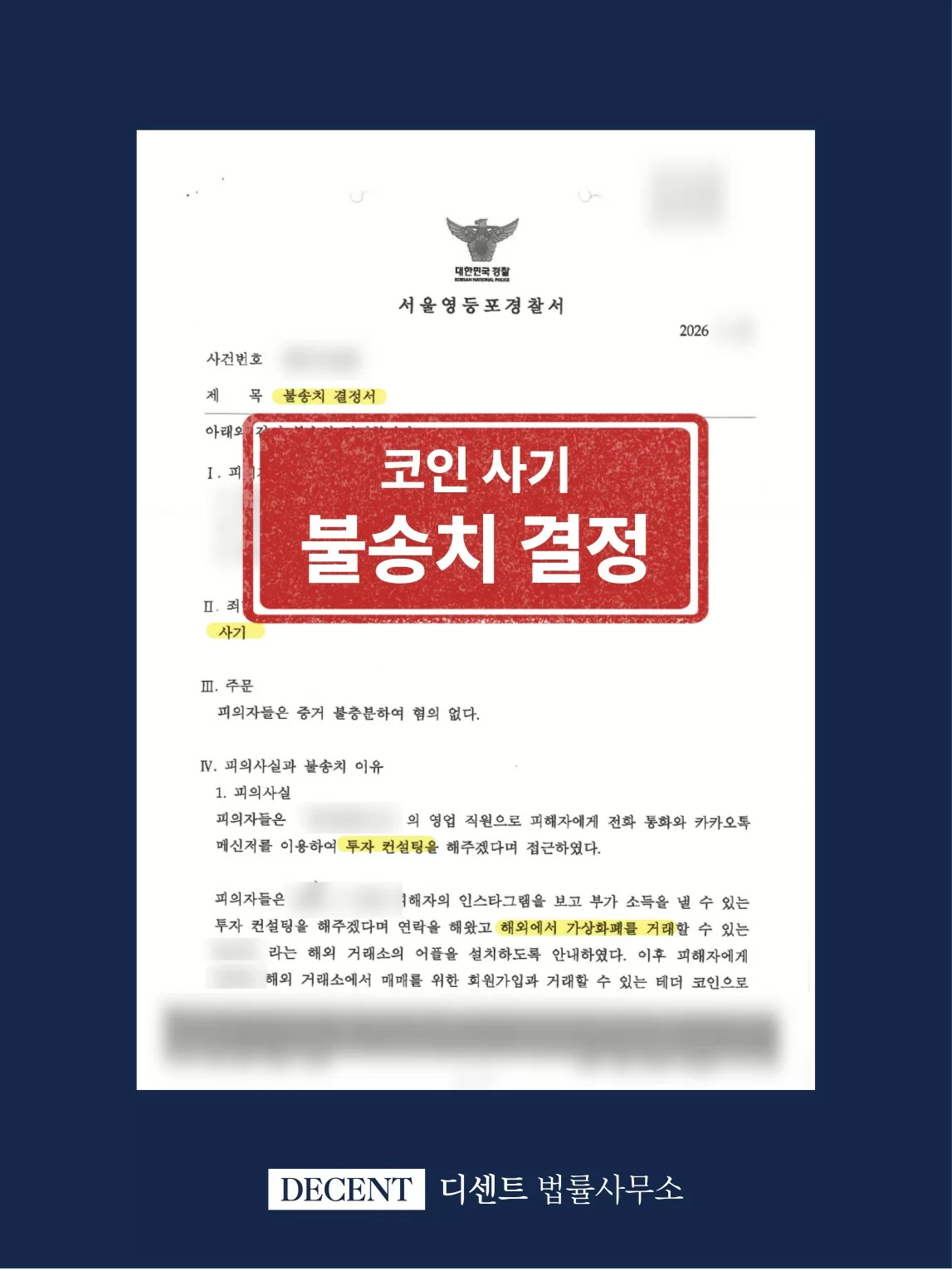
The police concluded that there was insufficient evidence to prove fraudulent intent in relation to the suspects’ involvement in the investment process.
As a result, all clients received a non-referral decision on the grounds of no charge.
Legal Consultation
All consultations are conducted after a case review by the attorney in charge.
Providing the key details of your case in advance will help you receive more specific advice.