

PRACTICES - Crypto
Dcent proves its results
through numbers
backed by experience.
17,689+
Don't entrust your virtual asset case
to just anyone.
Our dedicated virtual asset team
delivers tailored strategies
drawn from direct, hands-on experience.
As the virtual asset market expands,
so does its legal complexity.
-
Virtual Asset
Market CapKRW 91 Trillion -
Average Daily
Trading VolumeKRW 5.9 Trillion -
Annual Virtual Asset Users
10.95 Million
[Source: Korea Financial Intelligence Unit, Financial Supervisory Service]
-
What Are Virtual Assets?
-
Virtual assets refer to electronically represented assets with economic value that can be traded or transferred by electronic means. Unlike simple digital information, virtual assets carry recognized monetary value and can serve as objects of transaction — spanning the entire lifecycle of issuance, distribution, custody, and brokerage. That is why Dcent Law Firm takes a comprehensive approach: understanding the core structure of virtual assets and addressing legal matters spanning civil and criminal litigation, advisory services, and regulatory compliance.
-
What Is Blockchain?
-
Blockchain is a technology that stores transaction data and other information in discrete blocks linked together in a chain, which are then collectively stored and verified across a distributed network. Unlike conventional data storage, blockchain is highly resistant to tampering and forgery, ensuring transparency and reliability of transaction records — raising legal issues not only in the issuance and distribution of virtual assets, but also in smart contract governance, platform operations, and data management. That is why Dcent Law Firm addresses the full spectrum of blockchain legal matters — from reviewing the technical structure of blockchain systems to providing service advisory, and handling civil and criminal issues.
-
What Are Virtual Asset
Service Providers? -
A Virtual Asset Service Provider (VASP) refers to any entity that, as a business, engages in the buying, selling, exchanging, transferring, custody, or management of virtual assets, or acts as an intermediary or broker thereof. Whether an entity qualifies as a VASP depends not merely on whether it operates a virtual asset-related business, but on the actual structure of its operations and the nature of services provided. This distinction gives rise to a wide range of legal issues, including registration obligations, anti-money laundering (AML) compliance, Travel Rule requirements, and the establishment of a comprehensive compliance framework. That is why Dcent Law Firm provides multi-faceted advisory services covering business legality reviews, filings under the Specified Financial Information Act (SFIA), KYC structure design, and the allocation of roles between domestic and overseas entities.
-
What Is Virtual Asset
User Protection? -
Virtual asset user protection refers to a regulatory framework designed to safeguard users' deposited funds and virtual assets, while prohibiting unfair trading practices such as market manipulation and the use of undisclosed information. In particular, virtual asset service providers are required to maintain robust management systems to prevent user asset losses resulting from hacking, system failures, and security breaches. Failure to fulfill these obligations may lead to civil and criminal liability or regulatory consequences. That is why Dcent Law Firm's dedicated team handles the full range of disputes on behalf of those who have suffered damages — including hacking incidents, asset leakage, deposit refund disputes, and unfair trading practices — providing both civil and criminal representation, including damages claims.
Decent Contents








CASES
MORE-
Fraud Allegations Involving a Crypto Trading Signal Room and Referral Program — Case Closed Without Referral to Prosecutors
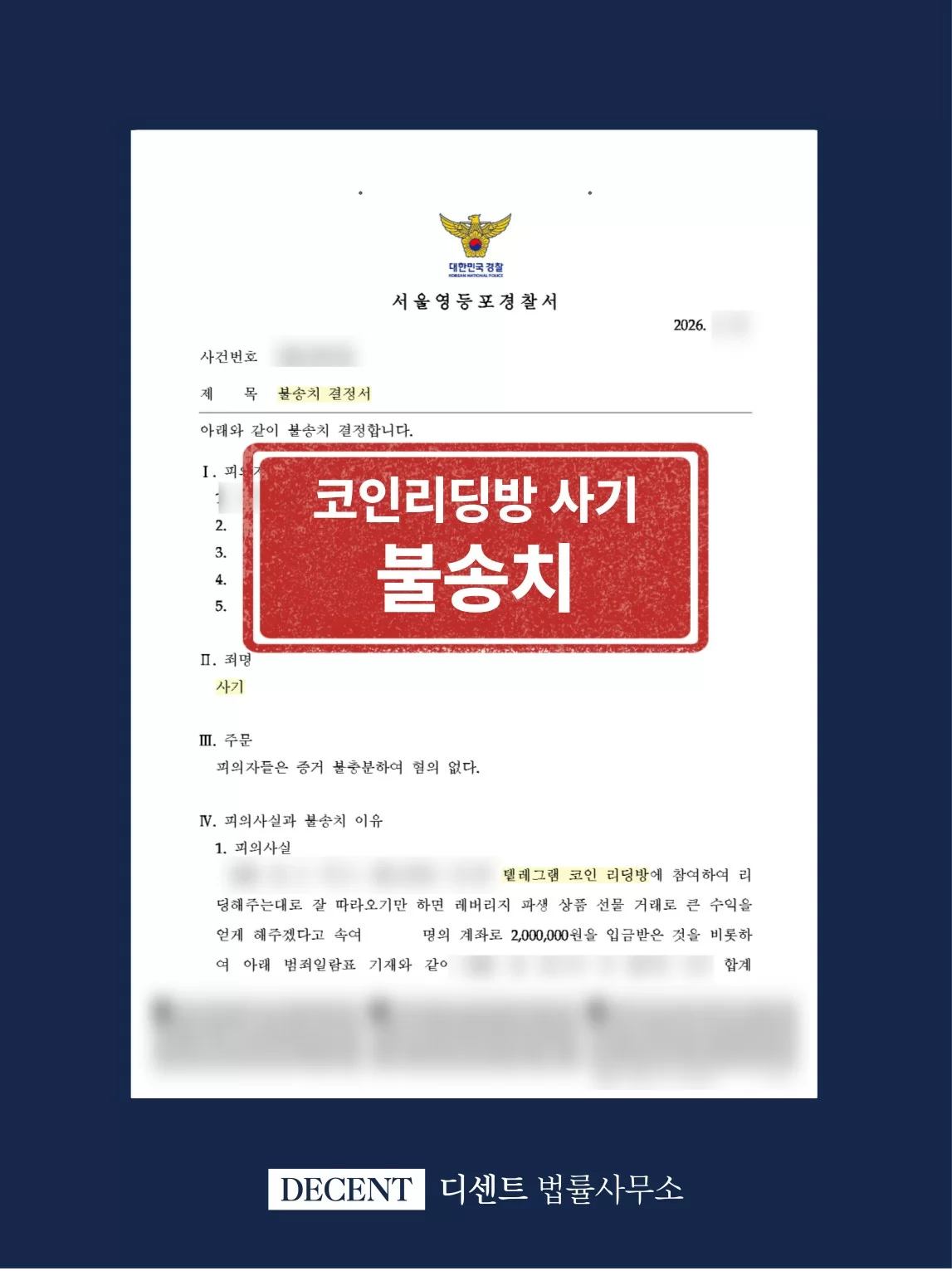 Police Non-Referral Decision
 -
USDT Sponsorship Agreement Review and Successful Contract Execution with an Overseas Participant
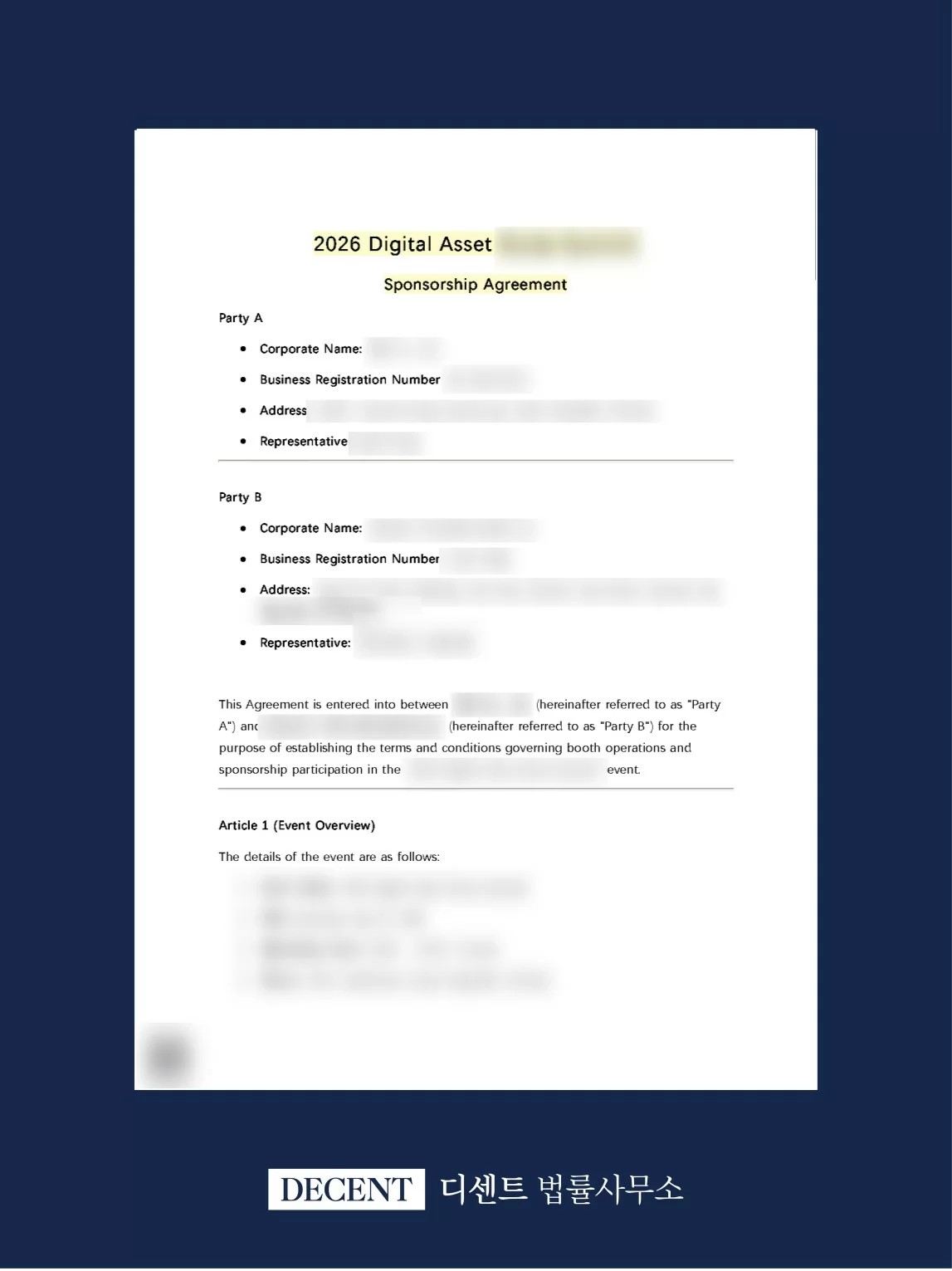 Delivery of the Final English Sponsorship Agreement
 -
Digital Wallet Development and Delivery Agreement Review and Copyright Ownership Advisory
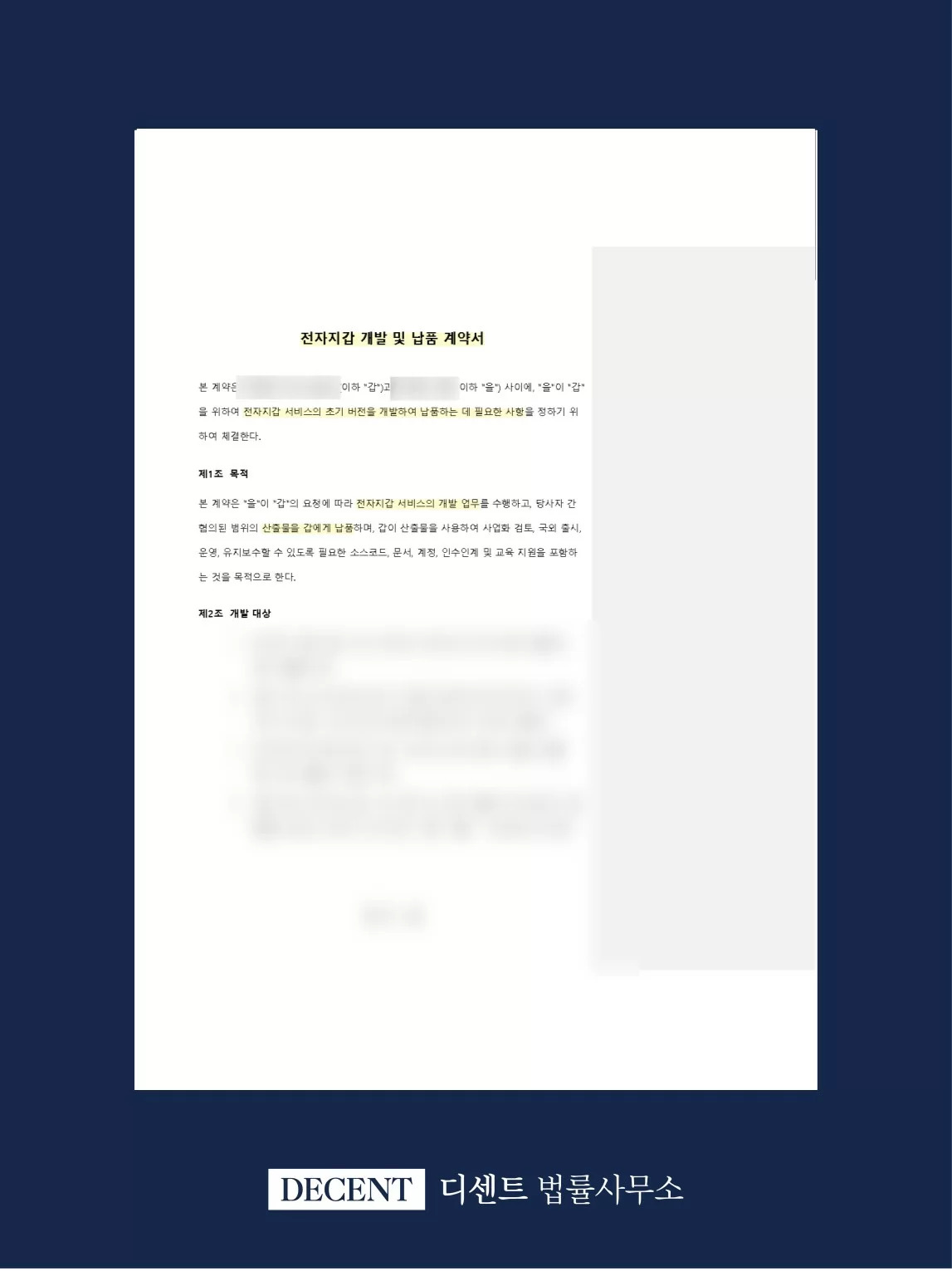 Delivery of Reviewed Agreement
 -
USDT Escrow Payment Agency Agreement Review and Advisory on Payment Structure
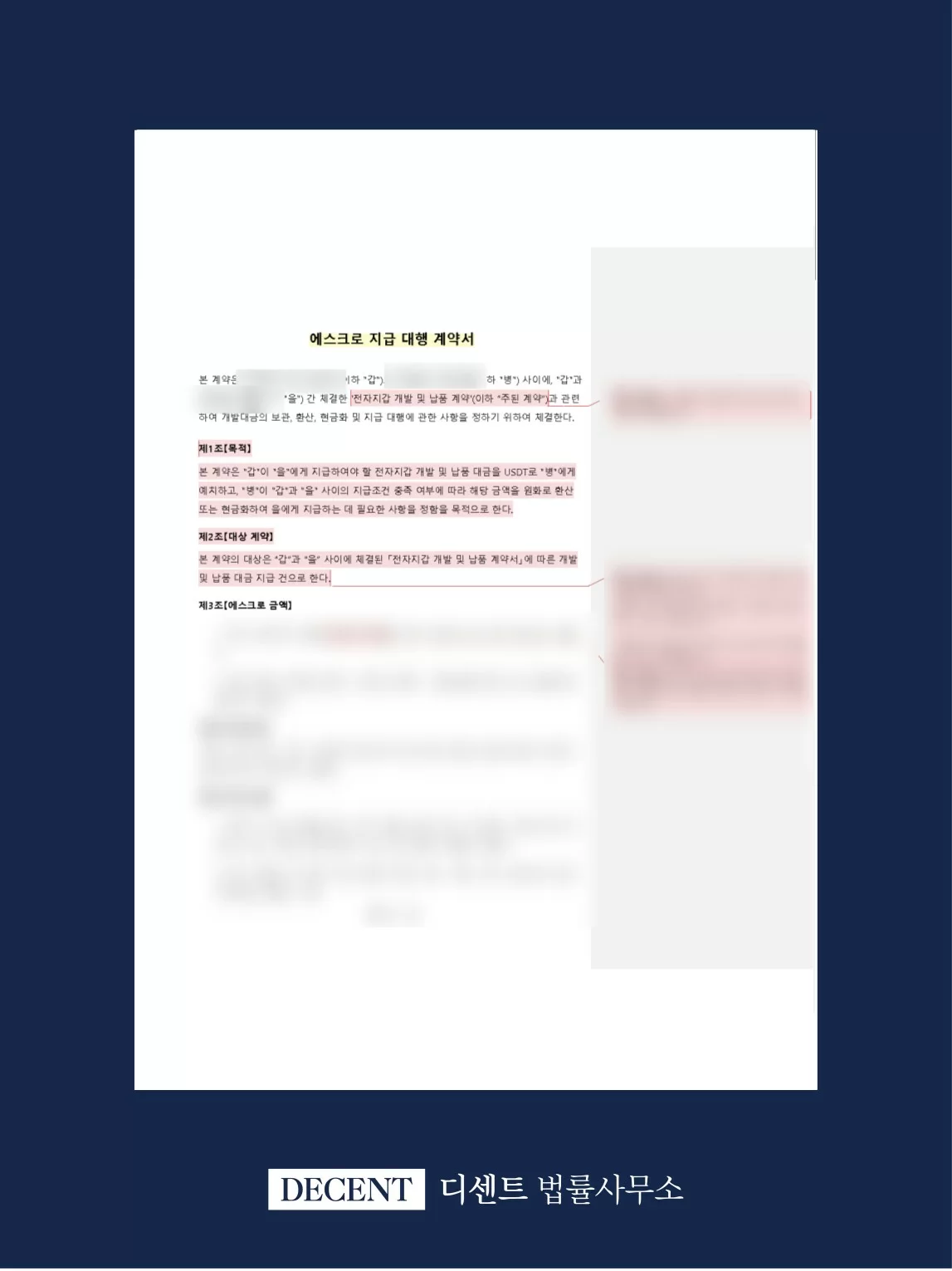 Delivery of Reviewed Agreement
 -
Crypto OTC Exchange Operator Cleared of Fraud Accomplice Allegations, Including Illegal Fund-Raising and Electronic Financial Transactions Act Charges
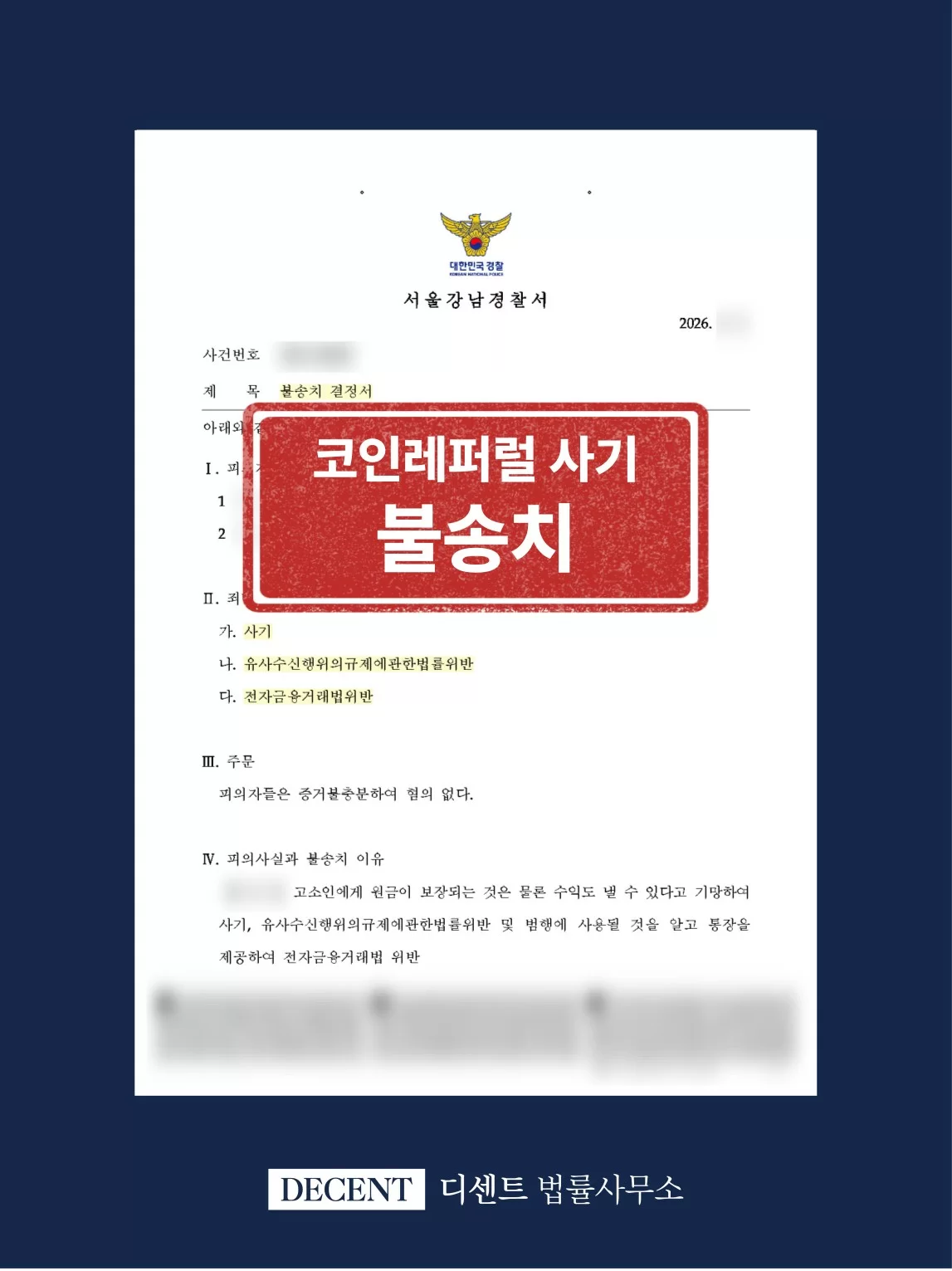 Non-Referral Decision
Virtual Asset Team
-
 MP
MPHyeonsu “Elliot” Jin
#Cross-border · Dispute Resolution #Crypto #VC · Financial Advisory #IP Litigation #Sports
-
 MP
MPPureun “Ian” Hong
#Criminal #Class Action #Crypto #Real Estate Disputes · Construction #Entertainment
-
 P
PSunghwan “Sean” Lim
#Civil #Criminal #Crypto #Cross-border · Dispute Resolution #Real Estate Disputes · Construction


