

NDA Review for an Investment Information Company: Protecting Member Data and Internal Materials
Case Overview
- Client Information
- Corporate / Business Entity
- Case Details
-
The client operates an investment information service and requested a legal review of a non-disclosure agreement to be executed alongside an employment agreement with an external expert.
The existing employment agreement combined confidentiality obligations, non-solicitation provisions, and intellectual property ownership in a single clause. This made it difficult to determine the scope of each obligation and assess potential breaches in the event of a dispute.
The client therefore needed a more detailed agreement that would protect proprietary information, including its member database and CRM data, without unnecessarily restricting the expert’s pre-existing knowledge, experience, and analytical skills.
Decent's Strategy
▪️ Specifically defined confidential information to include member and prospective member data, databases, CRM records, administrator access rights, operational processes, pricing policies, and unpublished content
▪️ Excluded the expert’s pre-existing market analysis methods, general industry knowledge, and individual professional capabilities from the definition of confidential information
▪️ Prohibited the storage or transmission of company information through unauthorized personal email accounts, messaging applications, cloud services, and storage devices
▪️ Separated restrictions on soliciting members, employees, freelancers, instructors, and other personnel into a standalone non-solicitation provision
▪️ Established procedures for the return and deletion of company materials and the revocation of system access upon resignation, leave of absence, reassignment, or a security incident
▪️ Specified recoverable loss items, including investigation costs, forensic expenses, system restoration costs, external advisory fees, and legal costs
▪️ Clarified ownership of intellectual property rights in reports, videos, lecture materials, and other work products created in the course of the engagement
Results & Significance
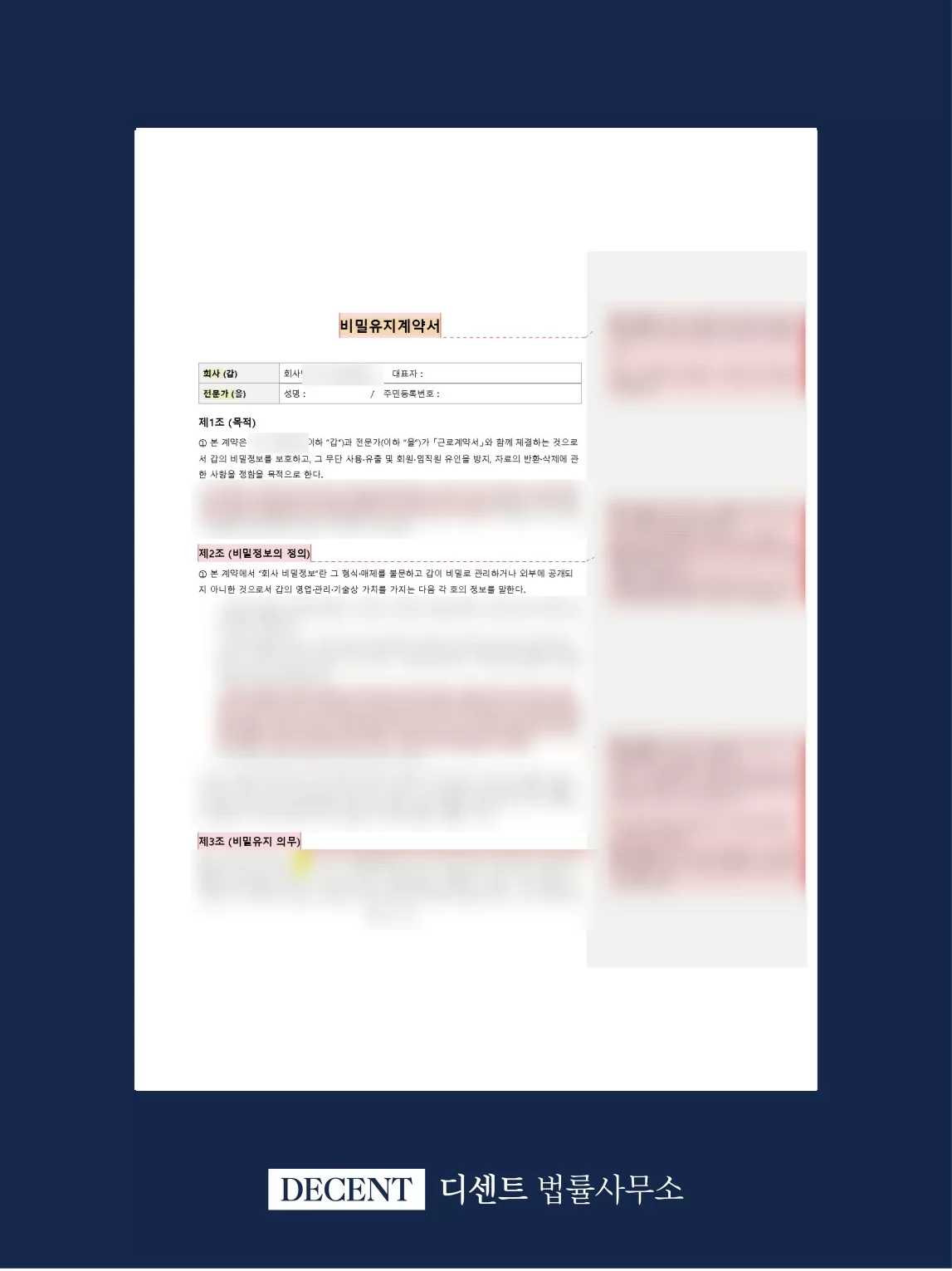
1. Defining the Scope of Confidential Information
The agreement specifically listed key categories of confidential information, including member data, CRM records, operational manuals, and unpublished content.
A general catch-all provision covering other non-public business, technical, and administrative information was also included. This approach improved clarity while reducing the risk that newly created or previously unlisted information would fall outside the scope of protection.
2. Separating General Professional Activities from Confidentiality Obligations
The expert’s pre-existing knowledge, analytical methods, and professional capabilities were expressly excluded from the company’s confidential information.
The agreement was also structured so that general professional activities would not be restricted unless they involved the use of the company’s confidential information. This balanced the company’s need for protection with the expert’s freedom to continue legitimate professional activities.
3. Establishing Practical Procedures for Potential Breaches
The agreement separately addressed the return and deletion of materials, revocation of system access, non-solicitation obligations, and recoverable damages.
Rather than relying on a general confidentiality clause alone, the revised agreement set out specific measures the company could take upon termination of the engagement or when unauthorized use or disclosure was suspected.
Legal Consultation
All consultations are conducted after a case review by the attorney in charge.
Providing the key details of your case in advance will help you receive more specific advice.