

No Indictment in an Online Defamation Case Under Korea’s Network Act
Case Overview
- Client Information
- Individual / Suspect
- Case Details
-
Our client operated a private academy in the education sector and regularly held online information sessions for parents.
During one of these sessions, the client referred to posts and comments that had already been publicly uploaded on a well-known online community for parents. The purpose was to explain general points of caution within the education industry. The client did not mention the name of any specific academy or directly identify any particular business.
However, another academy in the same industry filed a criminal complaint, alleging that the client had effectively referred to its business and spread false information, thereby damaging its reputation and interfering with its business operations.
The client came to Decent Law Firm after the investigation had already begun.
The alleged charges were defamation by false statements of fact under Article 70(2) of the Act on Promotion of Information and Communications Network Utilization and Information Protection (the “Network Act”) and obstruction of business.
Decent's Strategy
1. Whether the Alleged Victim Was Identifiable
The posts referred to by the client did not include the name of any specific academy.
Decent Law Firm analyzed the titles and contents of the referenced posts and submitted materials showing that many academies in the Seoul metropolitan area used the same or similar expressions. Based on this, we argued that the complainant academy could not be identified from the client’s statements alone.
The investigative authority accepted that it was difficult to conclude that the complainant academy had been specifically identified.
2. Whether False Statements of Fact Were Made
The materials referred to by the client consisted of publicly available online posts and comments written by parents, largely based on personal experiences and opinions.
Decent Law Firm submitted a written legal opinion explaining that the expressions were closer to subjective evaluations or opinions than concrete factual statements that could be objectively proven true or false.
The investigative authority also found it difficult to treat the statements as false statements of fact under the Network Act.
3. Whether There Was Intent to Defame
Decent Law Firm consistently explained that the client had used presentation materials with the names of specific academies obscured, and that the overall purpose of the session was to provide information to parents, not to attack a particular competitor.
After reviewing the overall context, the investigative authority concluded that it was difficult to find that the client had acted with intent to defame the complainant academy.
Results & Significance
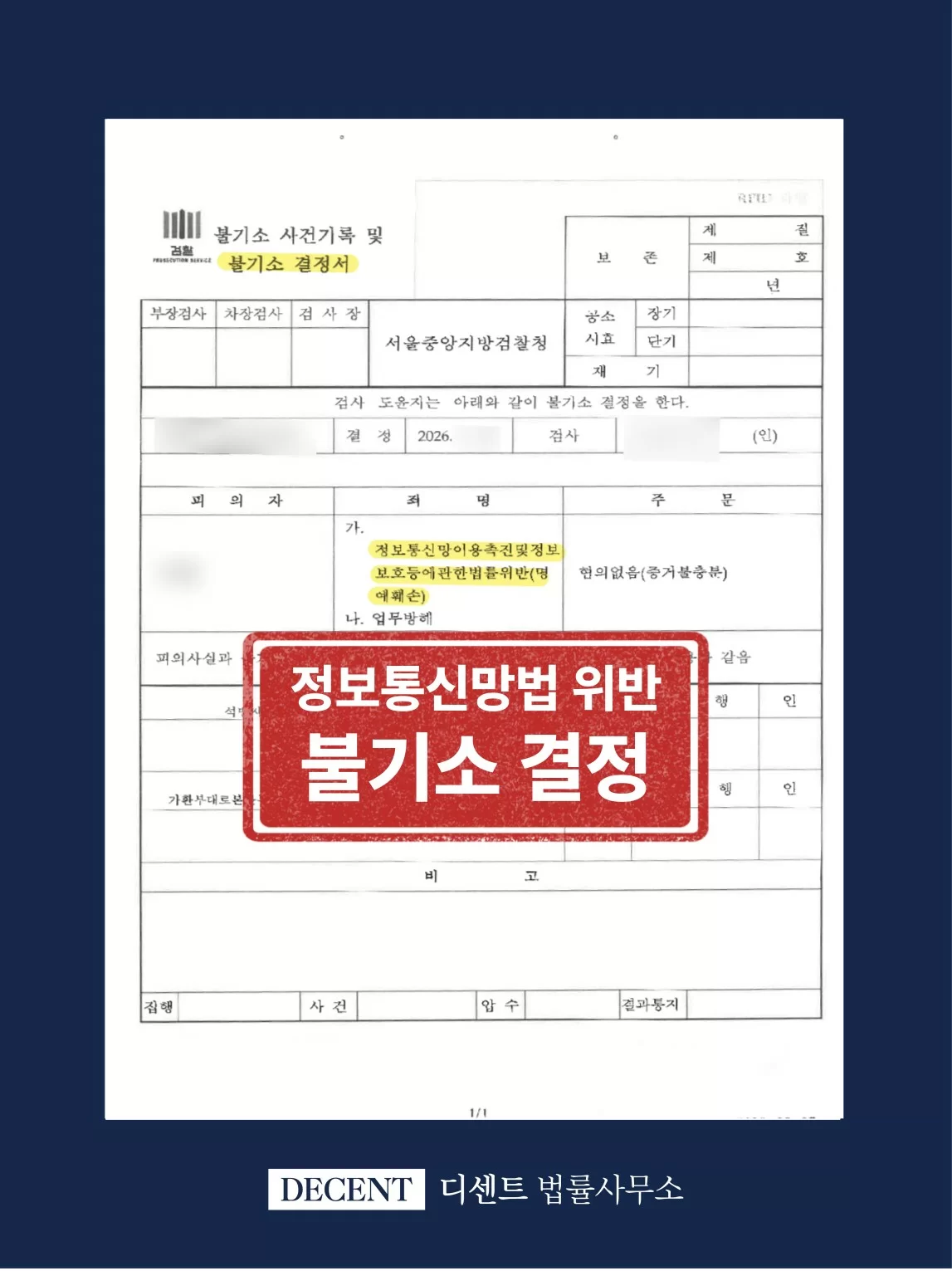
The case was ultimately closed with a non-forwarding decision by the police and a no-indictment decision by the prosecution.
Decent Law Firm’s criminal defense team prepared the legal arguments for each element of the alleged offense from the early stage of the investigation and proactively addressed factors that could have been interpreted unfavorably against the client.
Legal Consultation
All consultations are conducted after a case review by the attorney in charge.
Providing the key details of your case in advance will help you receive more specific advice.